

Facilitator. Negotiator. Coach. Founder. Athlete. The through line is simpler than the titles suggest.
I’ve spent thirty years getting paid to walk into situations most people prefer to avoid. High-stakes negotiations. Government crises. Boardrooms where the air had gone out of the room and someone needed to find a path forward
After leaving home at fifteen staring down the barrel of my stepfather’s revolver, I was living alone in a studio apartment. My biological mother told my school, when I tried to re-enroll, to pass along a message: Tell him to give up. He should enlist and accept he’s never going to be anything.
Those words left some marks. My response, standing there at fifteen, was short and direct: Challenge accepted. Watch what I do.
That decision built everything that came after. Not because the spite lasted, but because the habit it created did. Show up to hard situations. Stay until there’s progress. Don’t leave the room before the work is done.
I didn’t know at fifteen I was building a career out of it.
After transitioning to the private sector and cutting my teeth at one of the top investment banking firms in the U.S., I founded The Phoenix Group International in San Francisco, a corporate finance firm built at the center of one of the most consequential technological shifts in business history. Over the years that followed, I managed equity stakes in companies reshaping digital music, online commerce, and connected cars. I led and negotiated more than a billion dollars in transactions and watched an industry transform while helping the people building it navigate the financial complexity that came with it.
I was also working alongside government federal and state agencies, senior officials, and policy environments where the problems were complicated not just by technology and politics, but by human nature itself. Those rooms taught me something no corporate deal had: the most complex problems are never really about the problem. They are about the people who have to solve it.
That insight became the foundation of Confluence PSG, the strategic advisory firm I later built to do exactly that work at the highest levels. Facilitation and negotiation on some of the most contentious issues facing government and private sector leaders. Work where the stakes are real and the margin for error is very small.
I have held a Top Secret / SCI clearance. I have worked on sensitive matters for the government, the private sector and at the intersection of the two. I have been in rooms where the outcomes mattered in ways that went beyond any single organization or interest.
Three decades of that work built one thing more than any credential: a practitioner’s understanding of how hard things actually get done.
A few years ago, Crohn’s disease nearly killed me. I went from 170 pounds to 120 in less than a month, spending weeks convincing myself it was something minor while my body shut down. My wife, then my girlfriend, came back from a trip and found me in a recliner I hadn’t left in days. She moved a mattress into the living room. She spent her days fighting insurance companies and specialists while I was too weak to fight anything. One night the pain became so intense that I couldn’t sleep at all. Seventy-two hours without sleep. Death was in the room. I didn’t fight it or bargain with it. I just acknowledged it. Then I said: Not yet. Not now. There’s too much left to go do.
Carrie found a way through the medical bureaucracy. Hours later I was emergency admitted. The surgeon removed what was left of my large intestine. It disintegrated in his hands. Another 24 hours, he told us, and I would have gone septic. Twenty-seven surgeries over the next 48 months. Six weeks after the one that saved my life, with a medical device attached to my body, I made my 500th skydive.
That experience didn’t hand me clarity in some dramatic way. It stopped the noise long enough for a question to get loud that I had been successfully avoiding for thirty years. Whose scoreboard am I playing by? What’s on it that I chose, and what did I absorb without noticing? What do I want the rest of this to look like? I started asking those questions slowly and, at times, uncomfortably. The life I had been building was impressive by a lot of measures and it was mine by fewer than I had thought.
So I made a decision. Not to recover. Not to go back to where I was before. To go further than I had ever been. In the work. In my relationships. In how I showed up every day. In life.
A few years ago, Carrie and I made a decision that people who cared about us told us was too much risk. We were building Confluence PSG, doing meaningful work from a life we had built over ten years in Colorado. The question that had gotten loud after the surgeries was getting louder still: what would it look like to choose how you live, not just where you work? We went looking for the answer on an anniversary trip to the Carolina coast. We made an offer on a house we had seen for fifteen minutes, below ask, with a 120-day close, contingent on selling Colorado. We hadn’t listed Colorado yet. They accepted. Forty-eight hours after listing Colorado, it sold. Above ask. All cash. Fourteen-day close. A month later, we moved to that house and got a condo in Colorado to split our time. In the year after that move, we generated more revenue and more meaningful work across more business lines than in the year before it. Not because the coast is magic.
A person who is genuinely happy in their life shows up differently in every room that matters. The happiness isn’t separate from the performance. It fuels it.That’s not a philosophy. That’s what happened.
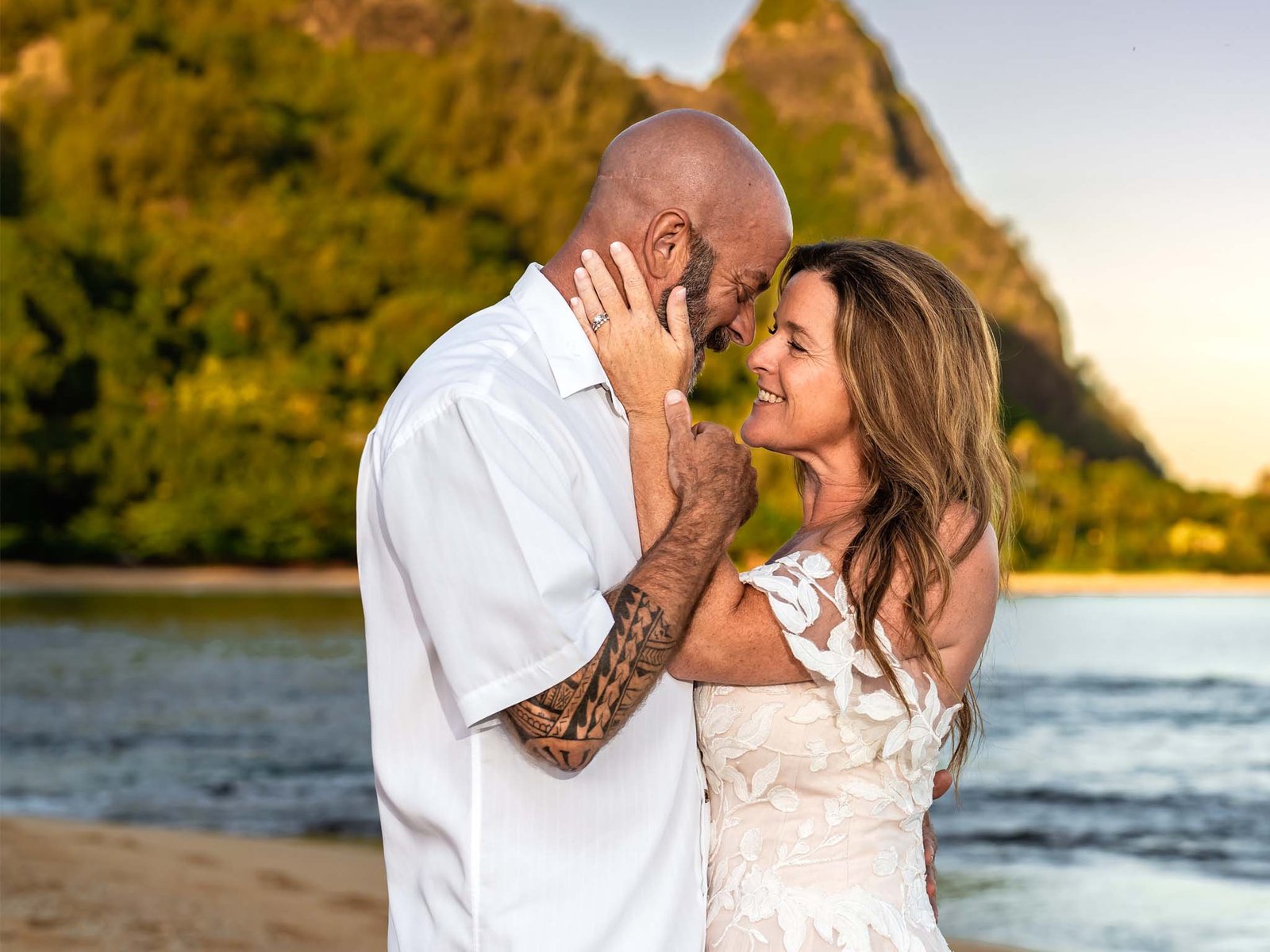
None of this happens without Carrie, the woman who is my rock, my light.
She moved a mattress into my living room when I was dying, and when I got to the hospital, she stayed in the room with me, on a cot, through every surgery. She fought insurance companies and found specialists when I couldn’t fight anything.
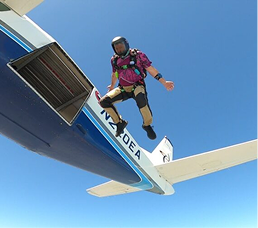
I have made over 1,000 skydives. In the spring of 2026, I could not get my main parachute to deploy. It may have been the packing of the parachute but five years of intense training had added 30lbs and my rig fit differently. I deployed the reserve, landed, and ordered a new rig built to my current dimensions that same week. I run. I ocean paddle. The person who walks into hard rooms should be someone who does hard things before breakfast.